Moreton Bay’s salt can do damage faster than you think. If you skip checks, your anchor and fittings can weaken without obvious signs.
Saltwater corrosion can silently compromise the structural strength of your anchor and your anchor chain, putting your boat at risk in a sudden squall.
You should inspect your mooring and anchoring gear before every trip and arrange annual testing if you’re unsure. We help owners of vessels across Australia understand coastal risks and take practical steps to stay safe.
If you’re unclear about the condition of your rig, call us on 07 3899 2933 for expert guidance today. For help with grade choices and test schedules, see our guide to grade 80 vs grade 100.
Key Takeaways
- Saltwater speeds up corrosion — check gear often.
- Inspect anchor and anchor chain before every outing.
- Arrange annual testing and documentation for peace of mind.
- Contact experts if markings or tags are worn or missing.
- Call 07 3899 2933 for tailored advice and inspections.
The Impact of Saltwater on Your Marine Rigging
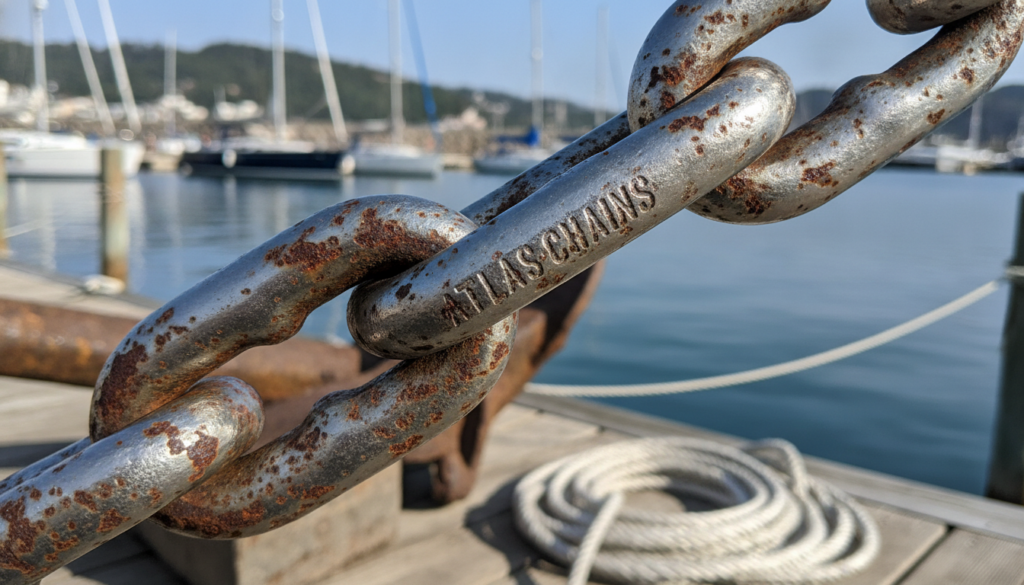
Continuous salt exposure causes fast oxidation that chips away at the structural strength of steel rigging. You may not see damage on the surface, but loss of breaking strength can be dramatic in coastal conditions.
Corrosion and Structural Integrity
Saltwater in coastal areas accelerates rust and pitting. That oxidation reduces the rated strength of your chain and links, often without obvious signs.
Regular inspection is essential. Even small surface rust can mean deeper harm to lifting equipment and fittings that you rely on for safety.
The Importance of Galvanised Protection
High-quality galvanised products give a sacrificial zinc layer that slows corrosion. Choosing the right link sizes and a good marine chain helps maintain performance under harsh conditions.
Our range of lifting solutions and specialised fittings is built for salty, humid environments. Pick quality products and inspect them often to keep your gear safe and reliable.
Why You Need a Trusted Marine Chain Supplier Brisbane
Trustworthy local partners make the difference when you need reliable mooring gear.
Since 1989 Atlas Chains has served the Brisbane area with expert lifting equipment and fittings. You can visit us at 35 Manton Street, Bulimba QLD 4171 to see our full range and speak to a team member.
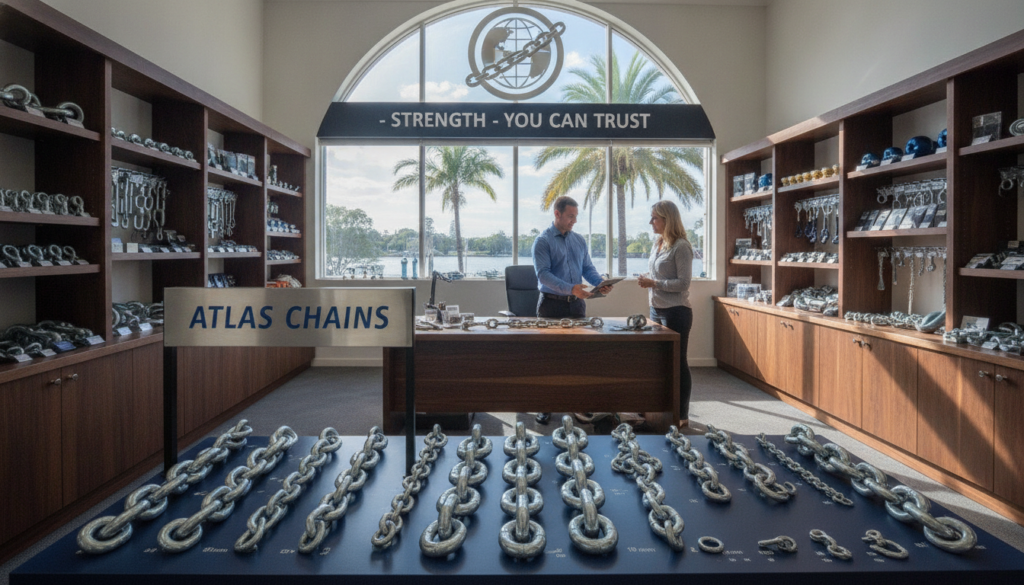
We offer certified products, fast service and hands-on advice to help you pick the right gear. Our industry experience means we test and supply chains and fittings that meet Australian safety standards.
- Certified lifting and mooring equipment
- Custom assemblies and professional advice
- Fast turnaround and ongoing customer support
If you need help choosing gear for Moreton Bay, call us on 07 3899 2933. Our team will give clear, practical solutions so your vessel stays secure.
Ensuring Safety Through Professional Testing and Certification
A certified inspection can reveal weaknesses you can’t see with the naked eye. Our NATA registered facility tests every piece of lifting equipment to Australian requirements so you know your vessel is secure.
NATA Registered Inspection Services
Every chain, link and fitting receives rigorous load testing to confirm rated strength and on‑water performance. We document results and supply certificates so your records meet compliance needs.
We offer onsite service and repairs to reduce downtime. Our team tests a wide range of lifting gear and adjusts assemblies to the correct sizes and load ratings.
Our accreditation guarantees each customer receives verified certification that supports long‑term reliability and safety.
- Professional load testing to verify strength and performance
- Onsite service and repairs to keep gear ready
- Full documentation to meet safety requirements
Choosing NATA registered testing gives you clear proof your lifting systems meet quality and safety standards. That means less guesswork and more confidence at sea.
Selecting the Right Chain for Moreton Bay Conditions
Picking the correct anchor and link sizes is about matching loads to your boat and the bay’s conditions. Start by confirming the Minimum Breaking Load (MBL) that suits your vessel’s displacement. This gives you a safety margin for sudden gusts and shifting tides.
Understanding Breaking Load Requirements
The MBL tells you how much force an anchor chain can withstand before failing. KITO PWB standards proof test each link at 2.5× the Working Load Limit, which helps ensure real-world safety.
Use MBL to select products that keep your lifting gear and anchoring system well within safe limits.
Choosing Between Grade L and Grade P
Grade L is ideal for heavy-duty mooring where toughness and durability matter. Grade P gives higher tensile strength and suits specialised anchoring setups.
Decide by comparing grade performance against your load needs, vessel size and local conditions.
Custom Assemblies for Your Boat
We design custom assemblies to fit your vessel’s size and the unique demands of Moreton Bay. Tailored fittings, correct link sizes and certified lifting equipment improve reliability and safety.
Talk to our team for technical advice so your anchoring solution delivers the right strength and performance every trip.
Conclusion: Secure Your Vessel Today
Small faults in your mooring gear can become big problems when weather or tides turn quickly. Ensure your anchor and anchor chain are the correct sizes and in good condition before every trip.
Choose quality products and arrange regular testing for lasting safety and performance. Our team offers reliable lifting equipment, fittings and expert advice so your vessels stay secure.
For tailored solutions, call us on 07 3899 2933. We’ll provide a free quote, practical support and the service you need to maintain reliability all season.
FAQ
Is my mooring and anchor gear at risk from saltwater in Moreton Bay?
Yes. Saltwater accelerates corrosion and weakens fittings, links and anchors over time. Regular inspections and using appropriately protected components — such as hot-dipped galvanised or stainless-steel fittings — help maintain strength and reliability in these conditions.
How does corrosion affect the structural integrity of my rigging?
Corrosion reduces metal cross-section and alters load paths, which lowers breaking loads and increases the chance of sudden failure. You should replace visibly pitted or heavily rusted links and have high-stress points checked by a qualified inspector to ensure safe performance.
Why is galvanised protection important for anchoring equipment?
Galvanising provides a sacrificial zinc coating that slows rusting on steel links and fittings. That coating extends service life, keeps rated strengths closer to spec and reduces maintenance frequency. For harsh estuarine environments like Moreton Bay, galvanised components are a practical choice.
What makes a trusted local chain supplier valuable for my vessel?
A reputable local supplier offers correct sizing advice, access to certified products and fast turnaround for replacements or custom assemblies. They understand regional conditions, stock appropriate grades and can advise on mooring solutions that match your vessel and usage.
How often should I have my rigging professionally tested and certified?
You should arrange inspections at least annually for active moorings, and immediately after any heavy weather event. NATA-registered inspection services provide traceable testing and certificates that verify breaking loads and component condition for compliance and insurance purposes.
What is a NATA-registered inspection and why does it matter?
NATA registration means the inspection lab meets national standards for competence and calibration. Using a NATA-registered service ensures test results are reliable and accepted by authorities and insurers when you need proof of safe load ratings and component history.
How do I determine the correct breaking load for my anchor chain?
Calculate the required breaking load from vessel displacement, windage, intended scope and expected environmental loads. Add safety factors demanded by your insurer or regulator. A supplier or marine engineer can help you choose a chain with an appropriate minimum breaking load.
What’s the difference between Grade L and Grade P chain?
Grade P (proof coil) chain is made to lower strength standards and suits light-duty applications. Grade L (higher-strength) provides greater breaking loads for heavier vessels and harsher conditions. Choose the grade that matches your load requirements and service environment.
Can I get custom assemblies for my boat’s anchoring system?
Yes. Custom assemblies — including matched lengths, swivels, shackles and thimbles — are commonly made to order. A quality supplier will test and certify assemblies to ensure components meet intended load ratings and safety requirements.
How do I pick the right chain size and fittings for Moreton Bay conditions?
Select chain size based on calculated breaking load and the vessel’s mooring scope. Use corrosion-resistant fittings, choose the correct grade, and factor in abrasion protection for seabed contact. If in doubt, seek expert advice to avoid underspecifying critical components.
Are there maintenance tips to extend the life of my anchoring system?
Rinse components with fresh water after exposure to salt spray, inspect links and fittings regularly, lubricate swivels, and replace worn or corroded parts promptly. Keep records of inspections and any NATA test certificates to track service life and performance.
What should I do after a storm to check my mooring and anchor gear?
Perform a visual check for bent, cracked or heavily corroded links and damaged fittings. Verify scope and position, and if you suspect overload or loss of integrity, take the assembly ashore for NATA-accredited testing or replacement before returning to service.