Did you know that nearly one-third of all workplace injuries involving heavy gear are linked to non-compliant hardware? For those of us working on sites across Brisbane, safety is not just a box to tick. It is the backbone of a professional operation.
We understand that keeping your lifting gear up to scratch can feel like a chore. However, using certified equipment is the only way to ensure your crew heads home safely every single day. Staying on top of current regulations protects your business from heavy fines and, more importantly, prevents avoidable accidents.
In this guide, we break down the essential standards you need to follow. Let us help you navigate the rules so your site remains secure and fully compliant.
We know that staying on top of Australian standards for lifting gear is a critical part of your daily workflow. Navigating the regulatory landscape for lifting equipment Brisbane requires a clear understanding of the rules that keep our job sites safe and productive.
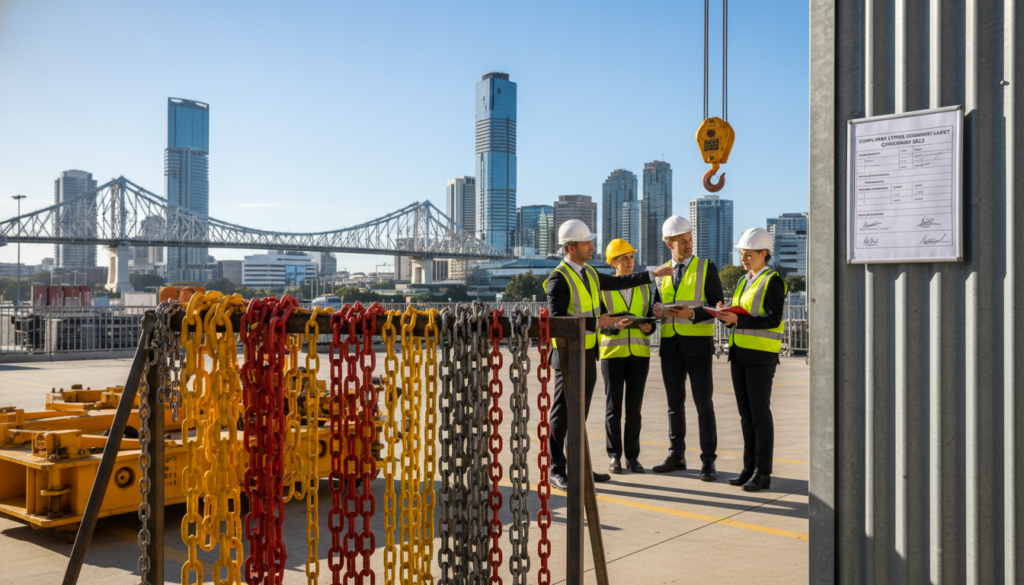
The Australian Standards provide the backbone for safety in our industry. Specifically, AS/NZS 1891.4 offers essential guidance for the selection, use, and maintenance of industrial fall arrest systems and related devices.
When it comes to lifting chains, compliance with AS 3775 and AS 2321 is mandatory. These standards ensure that every link and hook meets rigorous strength and durability tests before reaching your hands.
| Standard | Primary Application | Safety Focus |
|---|---|---|
| AS/NZS 1891.4 | Fall Arrest Systems | System Integrity |
| AS 3775 | Chain Slings | Load Capacity |
| AS 2321 | Short Link Chain | Material Quality |
Compliance is not just a box-ticking exercise; it is a fundamental requirement for every Person Conducting a Business or Undertaking (PCBU). Failing to adhere to these standards can lead to severe financial penalties and significant legal liability.
Beyond the legal risks, using non-compliant gear puts your team at unnecessary risk of injury. We believe that prioritizing high-quality lifting equipment Brisbane is the best way to ensure everyone goes home safely at the end of the day.
We believe that identifying high-quality rigging equipment Brisbane is a skill every tradie should master. When you are on a busy site, taking a few seconds to inspect your gear can prevent catastrophic failures. Understanding what to look for ensures that you only use tools that meet the rigorous safety standards required in Australia.

Every link of a compliant lifting chain must feature specific identification marks. These markings typically include the manufacturer’s brand, the grade of the steel, and a unique traceability code. If you cannot find these stamps, the chain is likely unrated and should never be used for overhead lifting.
High-quality chains are usually marked with “Grade 80” or “Grade 100” indicators. These numbers tell you the strength and load-bearing capacity of the metal. Always cross-reference these markings with the manufacturer’s documentation to ensure the chain is suitable for your specific rigging equipment Brisbane needs.
“Safety is not just a policy; it is a culture that begins with the integrity of the tools you hold in your hands every single day.”
A compliance tag is your primary proof that the gear has passed professional testing. You should look for a metal tag securely attached to the chain, which displays the date of the last inspection and the safe working load limit. If the tag is missing, illegible, or shows signs of tampering, you must remove the equipment from service immediately.
Verifying the authenticity of these tags often involves checking the NATA accreditation logo. You can also contact the supplier to confirm the serial number matches their records. Using reliable rigging equipment Brisbane ensures that your team stays safe and your operations remain fully compliant with local laws.
| Feature | Compliant Gear | Non-Compliant Gear |
|---|---|---|
| Markings | Clear, stamped grade/ID | Missing or painted over |
| Compliance Tag | Attached, legible, dated | Damaged or absent |
| Surface Condition | Clean, no deep cracks | Heavy rust or deformation |
| Documentation | Full test certificates | No records available |
Achieving peace of mind on the job site begins with NATA accredited lifting chain testing. While visual inspections are a necessary part of your daily routine, they cannot detect internal stress or microscopic fractures that compromise structural integrity. Professional testing provides the technical assurance needed to operate heavy machinery with confidence.
NATA accreditation is widely recognised as the gold standard for safety and rigorous testing in Australia. When a facility holds this accreditation, it means their processes meet strict international standards for competence and reliability. Choosing a provider that prioritises lifting chain testing nata ensures that your equipment undergoes precise calibration and stress analysis.
This level of scrutiny goes far beyond what a standard workshop can offer. By using certified laboratories, you guarantee that every link in your chain is evaluated against the highest safety benchmarks. This process effectively removes the guesswork from your lifting operations.
To maintain compliance and safety, your equipment must follow a strict inspection schedule. We recommend professional testing at least every 12 months, or sooner if the gear is subjected to heavy use or harsh environmental conditions.
Keeping accurate records of these tests is vital for your site audits. You should always maintain the following documentation for your lifting gear:
Regularly updating these files ensures that you are always prepared for safety inspections. It also helps you track the service life of your tools, allowing for timely replacements before a failure occurs.
We often see preventable accidents caused by simple oversights in equipment selection. When you manage a busy site, it is easy to overlook the small details that keep your team safe. By understanding the common mistakes made with rigging equipment Brisbane, you can foster a much stronger culture of safety.
Using hardware that lacks proper load ratings is one of the most dangerous shortcuts a team can take. Non-rated components often fail without warning, leading to severe workplace injuries or even fatalities. Beyond the physical risk, using uncertified gear can lead to significant insurance claim rejections if an incident occurs.
When you choose quality rigging equipment Brisbane, you are investing in peace of mind. Always ensure that every shackle, hook, and chain has clear, stamped markings that verify its capacity. If the hardware does not have a clear rating, it simply does not belong on your site.
| Feature | Rated Hardware | Non-Rated Hardware |
|---|---|---|
| Safety Certification | Compliant with Standards | None |
| Load Capacity | Clearly Stamped | Unknown/Unreliable |
| Insurance Coverage | Fully Supported | Likely Rejected |
| Failure Risk | Low (Predictable) | High (Catastrophic) |
Conducting a thorough pre-lift inspection is your best defense against equipment failure. You should look for signs of metal fatigue, such as hairline cracks, deep gouges, or permanent deformation. Even minor bending in a hook or link can indicate that the gear has been overloaded in the past.
Regularly checking your rigging equipment Brisbane helps you catch these issues before they escalate into dangerous hazards. If you notice any rust, corrosion, or missing identification tags, remove the item from service immediately. A proactive approach to maintenance ensures that your gear remains reliable for every heavy lift.
Maintaining your hoisting tools is essential for safety and performance on every Brisbane worksite. By dedicating time to routine care, you ensure that your equipment remains reliable and ready for heavy-duty tasks. Proper maintenance is the most cost-effective way to ensure your affordable hoisting tools brisbane last for years, saving you from the stress of unexpected replacements.
Moisture is the primary enemy of metal rigging gear, especially in the humid climate of Queensland. You should always store your chains in a clean, dry, and well-ventilated area to prevent rust from forming. Avoid leaving them directly on concrete floors, as these surfaces can absorb moisture and transfer it to the steel.
Using racks or designated storage bins keeps your chains off the ground and organized. If you work in coastal areas, consider applying a light coat of protective oil to the links. This simple barrier helps shield the metal from salt air and humidity, significantly extending the life of your gear.
Dirt, grit, and construction debris act like sandpaper when they get trapped in the links of your chains. Over time, this friction causes unnecessary wear that weakens the structural integrity of the metal. Regular cleaning removes these harmful contaminants before they can cause long-term damage to your equipment.
We recommend using a stiff brush and mild detergent to scrub away grime after heavy use. Once cleaned, ensure the chains are completely dry before returning them to storage. By keeping your gear pristine, you protect your investment in affordable hoisting tools brisbane and maintain the highest safety standards for your team.
We know that picking a reliable lifting gear Brisbane provider can feel like a daunting task. Choosing the right partner is crucial when you are sourcing equipment for your construction projects. A good supplier does more than just sell products; they act as a safety partner for your business.
Before you commit to a purchase, you should always verify the credentials of your provider. Ask them if their products meet current Australian Standards and if they provide NATA-accredited test certificates with every item. A top-rated lifting equipment supplier Brisbane will be happy to share this documentation without hesitation.
You should also inquire about their after-sales support and inspection services. Knowing that your supplier can assist with ongoing maintenance and recertification gives you extra peace of mind. If they cannot answer these basic safety questions, it is usually a sign to look elsewhere.
It is easy to be tempted by low prices, but cheap gear often lacks the necessary safety ratings. You must look for clear, permanent markings on the steel that indicate the grade and working load limit. Understanding the differences between grade 80 vs grade 100 chains is a great way to ensure you are getting the right tool for the job.
High-quality lifting solutions Brisbane are built to withstand the harsh conditions of our local construction sites. They feature superior heat treatment and consistent manufacturing processes that prevent premature failure. By choosing a trusted lifting gear store Brisbane, you ensure that your team stays safe and your project remains compliant with all legal requirements.
When you choose professional lifting equipment rental Brisbane, you are taking on a serious responsibility for site safety. It is easy to focus solely on the job at hand, but the gear you bring onto your site must be fully compliant with Australian standards. We believe that a proactive approach to documentation is the best way to protect your team and your project.
Every time you hire equipment, you must insist on receiving a complete set of compliance records. These documents act as your proof that the gear has been maintained and tested by qualified professionals. Without these, you are essentially operating in the dark regarding the safety of your lifts.
Make sure your rental provider supplies the following items before the equipment arrives on your site:
“Safety is not just a set of rules; it is a culture that starts with the quality of the tools we put into the hands of our workers.”
Verifying the authenticity of your paperwork is only the first step in professional lifting equipment rental Brisbane. You should also perform a thorough visual inspection of the gear as soon as it is delivered. Look for clear, legible identification tags that match the documentation provided by the supplier.
If a tag is missing or the equipment shows signs of excessive wear, do not use it. Contact your supplier immediately to request a replacement that meets all safety requirements. By staying vigilant, you ensure that your site remains compliant and your lifting operations stay safe for everyone involved.
When your project involves heavy or non-standard loads, relying on advanced rigging equipment Brisbane is essential for site safety. Complex lifts demand a higher level of planning and coordination to ensure that every movement remains controlled and secure. By following rigorous safety protocols, we can mitigate risks and ensure that even the most challenging tasks are completed without incident.
Executing non-standard or high-risk lifts requires a comprehensive lift plan that accounts for load weight, center of gravity, and environmental factors. You must ensure that all personnel involved are fully briefed on the specific hazards associated with the task. Using the right advanced rigging equipment Brisbane is only one part of the equation; the team must also understand the load path and potential pinch points.
Documentation is a critical requirement for these operations. You should always have a verified lift study and a clear communication plan in place before the first hook is attached. This level of preparation ensures that every team member knows their role and the emergency procedures if something goes wrong.
A thorough pre-lift inspection is the final line of defense against equipment failure. You should systematically examine every component of your rigging setup to identify signs of wear, deformation, or chemical damage. Never assume that gear is safe just because it was used successfully on a previous job.
To perform an effective inspection, follow these essential steps:
By documenting these checks, you create a clear audit trail that supports your commitment to site safety. Taking these extra minutes before a lift can prevent costly delays and, more importantly, protect your crew from harm.
We understand that heavy lifting is the backbone of many successful construction projects in Brisbane. Coordinating these complex tasks requires expert knowledge and a dedicated support team to manage logistics effectively. When you need the best crane hire brisbane, having a partner who understands local safety standards is essential for your peace of mind.
The rigger acts as the eyes and ears on the ground during any heavy lift. They are responsible for ensuring that all site compliance measures are strictly followed from start to finish. By verifying load weights and checking equipment integrity, they prevent accidents before they happen.
Riggers also communicate directly with crane operators to ensure precise placement of materials. Their expertise ensures that every movement remains within the safe working limits of the machinery. This constant vigilance is a critical component of maintaining a secure work environment.
| Role | Primary Responsibility | Compliance Focus |
|---|---|---|
| Rigger | Load attachment and signaling | Equipment integrity and safety |
| Crane Operator | Machine control and stability | Load charts and site limits |
| Site Supervisor | Overall project coordination | Regulatory documentation |
We provide comprehensive support to ensure your project runs smoothly and safely. Our team offers the guidance you need to select the right equipment for your specific site requirements. If you are searching for the best crane hire brisbane, we are ready to assist you with professional solutions.
Do not leave your site safety to chance when planning your next major lift. For professional assistance and expert advice, call us on 07 3899 2933 to discuss your requirements today. We look forward to helping you achieve a successful and compliant project outcome.
Maintaining high standards for your lifting gear creates a culture of safety that protects every worker on your Brisbane site. Consistent attention to detail ensures your business remains productive while meeting all legal obligations.
Safety functions as a living system rather than a single task to tick off a list. We encourage you to view regular inspections and proper storage as vital investments in your long-term operational success.
Our team at Brisbane Lifting and Rigging remains ready to support your specific project needs. We provide the expertise required to navigate complex compliance challenges with ease.
Reach out to us on 07 3899 2933 to discuss your current equipment requirements. We look forward to helping you maintain a safe and efficient workplace for your entire crew.
Atlas Chains Brisbanes most trusted supplier of Lifting Equipment, Chains, Marine Applications.

Copyright © , Website design and hosting by Langford Consulting